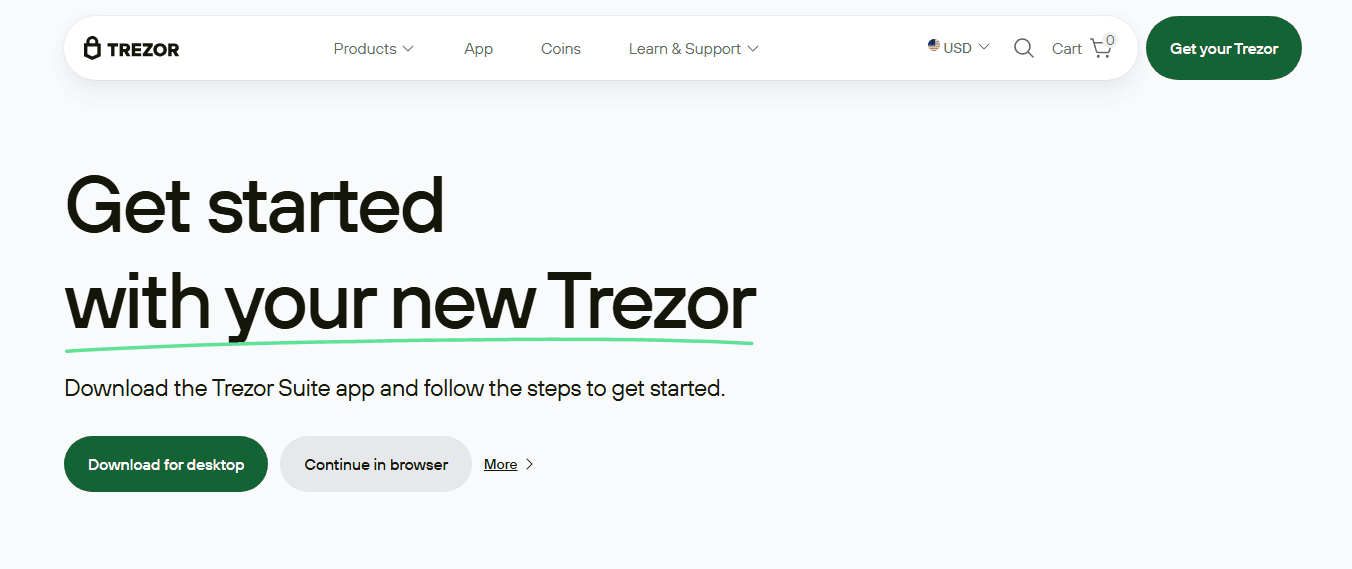
Trezor.io/Start – Official Entry Point for Secure Trezor Wallet Setup
As digital assets become more valuable and widely adopted, protecting cryptocurrency has become a top priority for users worldwide. Unlike traditional finance, cryptocurrency transactions are irreversible and ownership depends entirely on private keys. Losing control of those keys often means losing funds permanently. For this reason, hardware wallets are considered one of the safest storage solutions available.
Trezor, developed by SatoshiLabs, is a trusted hardware wallet designed to keep private keys offline. The official setup process for every Trezor device begins at Trezor.io/start. This page ensures that users initialize their wallets correctly, install authentic software, and follow security best practices from the very beginning.
This guide provides a complete explanation of Trezor.io/start, its purpose, and how to use it properly.
Overview of Trezor Hardware Wallets
A Trezor hardware wallet is a physical security device that stores cryptographic private keys in a protected environment. Instead of relying on software wallets or exchanges that remain connected to the internet, Trezor isolates sensitive information and requires physical confirmation for transactions.
Key benefits include:
Offline private key storage
Protection against malware and phishing
Secure transaction verification
Full user ownership of assets
Trezor wallets are open-source, meaning their software can be publicly audited for transparency and security.
Available Trezor Wallet Models
Trezor currently offers two primary devices:
Trezor Model One
This model uses physical buttons and a simple display. It provides essential security features and is ideal for users who want a straightforward hardware wallet experience.
Trezor Model T
This advanced model includes a touchscreen interface, enhanced backup options, and additional security features. It is suitable for users who require more flexibility and advanced protection.
Both models use the same official setup process through Trezor.io/start.
What Is Trezor.io/Start?
Trezor.io/start is the official onboarding page created by Trezor to guide users through the correct setup and recovery procedures. It acts as a secure bridge between the hardware device and the official Trezor software ecosystem.
Through this page, users can:
Download verified Trezor software
Install or update device firmware
Create a new wallet securely
Restore an existing wallet
Learn how to protect recovery data
Using this page is essential to avoid fake software or malicious setup instructions.
Why the Official Setup Page Matters
One of the most common methods of cryptocurrency theft involves fake wallet setup websites. These sites imitate legitimate brands and attempt to collect recovery phrases from unsuspecting users.
Using Trezor.io/start helps protect users by ensuring:
Firmware authenticity is checked on the device
Recovery seeds are generated offline
No sensitive data is typed into a browser
Software downloads are legitimate
For maximum safety, users should always manually enter the website address instead of following external links.
Preparing for the Setup Process
Before beginning setup, users should prepare the following items:
A brand-new or factory-reset Trezor device
A desktop or laptop computer
Reliable internet connection
Original USB or USB-C cable
Pen and paper for recording recovery words
A private and secure environment
It is strongly recommended to avoid public computers or shared networks during setup.
Step-by-Step Setup Using Trezor.io/Start
Step 1: Access the Setup Page
Navigate to Trezor.io/start and select your specific device model. Connect the Trezor device to your computer using the provided cable.
New devices are shipped without firmware to prevent tampering.
Step 2: Download Trezor Suite
The setup page will prompt you to install Trezor Suite, the official wallet management application.
Trezor Suite allows users to:
View balances and accounts
Send and receive cryptocurrency
Manage multiple assets
Configure privacy and security settings
Perform firmware updates
Always install the software from the official website.
Step 3: Firmware Installation
Firmware is the internal software that powers the device. During setup, users are guided through installing the latest firmware version.
Important considerations:
Firmware installation must be confirmed on the device screen
The device verifies authenticity automatically
Updates improve security and functionality
Never disconnect the device during installation.
Step 4: Wallet Creation or Recovery
Users are presented with two options:
Create a New Wallet
This option generates a new wallet and a unique recovery seed.
Recover an Existing Wallet
This option restores access using a previously created recovery seed.
All recovery word entry occurs directly on the hardware device.
Step 5: Recording the Recovery Seed
The device will display a 12-word or 24-word recovery seed. This seed is the master key to the wallet.
Best practices include:
Writing the words in exact order
Using pen and paper only
Storing the seed in a secure location
Never taking photos or screenshots
Never sharing the seed with anyone
Loss of the recovery seed results in permanent loss of access.
Step 6: Recovery Seed Verification
To confirm accuracy, the device will ask users to verify selected recovery words. This ensures the backup was recorded correctly.
If verification fails, users should restart the setup process and generate a new wallet.
Step 7: Setting a PIN Code
A PIN code protects the device against unauthorized physical access.
The PIN keypad layout is randomized
Incorrect attempts increase delay
The PIN is required every time the device is used
The PIN should never be stored with the recovery seed.
Managing Cryptocurrency with Trezor
After setup, users manage their assets through Trezor Suite.
Receiving Funds
Generate a receiving address
Verify the address on the device screen
Share the verified address
Sending Funds
Enter transaction details in Trezor Suite
Confirm the address and amount on the device
Approve the transaction physically
The device screen is the final authority for transaction verification.
Supported Cryptocurrencies
Trezor supports a wide range of cryptocurrencies, including:
Bitcoin (BTC)
Ethereum (ETH)
Litecoin (LTC)
Cardano (ADA)
Polygon (MATIC)
Thousands of ERC-20 tokens
Asset availability depends on device model and firmware version.
Advanced Security Features
Passphrase Protection
Adds an additional secret phrase to create hidden wallets.
Hidden Wallets
Allows multiple wallets derived from a single recovery seed.
Shamir Backup (Model T Only)
Splits the recovery seed into multiple shares, reducing single-point failure risks.
Common Security Mistakes to Avoid
Using unofficial setup pages
Entering recovery words on a computer
Storing recovery data digitally
Purchasing used hardware wallets
Ignoring firmware updates
Following official instructions at Trezor.io/start helps prevent these errors.
Device Loss or Replacement
If a Trezor device is lost, damaged, or stolen:
Funds remain secure
Wallet can be restored using the recovery seed
A replacement device can be set up via Trezor.io/start
Without the recovery seed, funds cannot be recovered.
Why Trezor Is Trusted Worldwide
Trezor’s reputation is built on:
Open-source firmware
Transparent security design
Long-term industry presence
Continuous updates and audits
Strong global user community
Trezor.io/start plays a central role in maintaining this trust.
Conclusion
Trezor.io/start is the official and secure gateway for setting up a Trezor hardware wallet. It ensures genuine software installation, verified firmware, and proper wallet initialization while guiding users through essential security practices.
For anyone serious about protecting cryptocurrency assets and maintaining full ownership, starting at Trezor.io/start is a critical first step.