How to Set Up Your Trezor Wallet Using Trezor.io/Start
Keeping your cryptocurrency safe starts with the right hardware wallet. Trezor is one of the most trusted options, and setting it up correctly is crucial to protecting your funds. The official starting point for setup is Trezor.io/start, which ensures you use authentic software and follow proper security procedures.
This guide walks beginners through the full process.
What You Need Before You Start
Before connecting your Trezor, make sure you have:
A new or factory-reset Trezor device
A desktop or laptop computer
A reliable internet connection
The original USB/USB-C cable
Pen and paper for backup
A private and secure location
⚠ Avoid storing recovery seeds digitally or using public computers.
Step 1: Go to the Official Setup Page
Open your browser and type trezor.io/start manually.
Select your Trezor model.
Connect the device to your computer.
New devices do not come with firmware installed, which is normal.
Step 2: Install Trezor Suite
Trezor Suite is the official application used to manage your wallet. It allows you to:
View balances and transaction history
Send and receive crypto safely
Manage multiple assets
Update firmware
Download it only from the official website to avoid counterfeit software.
Step 3: Install Firmware
The device will guide you to install or update its firmware:
Confirm installation on the device screen
Wait until the process is fully completed
Firmware updates improve security and functionality
Do not disconnect your Trezor during this process.
Step 4: Create or Recover a Wallet
You will be asked to choose:
Create New Wallet – generates a brand-new wallet and recovery seed
Recover Existing Wallet – restores a wallet from a previous recovery seed
All recovery words are entered directly on the device.
Step 5: Backup Your Recovery Seed
Your Trezor will generate a 12-word or 24-word recovery seed. This is the only way to restore your wallet.
Write down every word in order
Store the backup offline in a safe place
Never share it or take a photo
Losing your recovery seed means losing access to your crypto forever.
Step 6: Verify the Recovery Seed
The device will ask you to confirm certain words to ensure accuracy.
If confirmation fails, restart the setup and create a new wallet.
This step guarantees your backup is correct.
Step 7: Set a PIN
A PIN code secures your device from unauthorized physical access:
The keypad layout is randomized for security
Incorrect attempts trigger increasing delays
PIN is required whenever you connect the device
Keep your PIN separate from your recovery seed.
Using Your Wallet Safely
Receiving Crypto
Generate a receiving address in Trezor Suite
Verify it on your Trezor device screen
Share the verified address
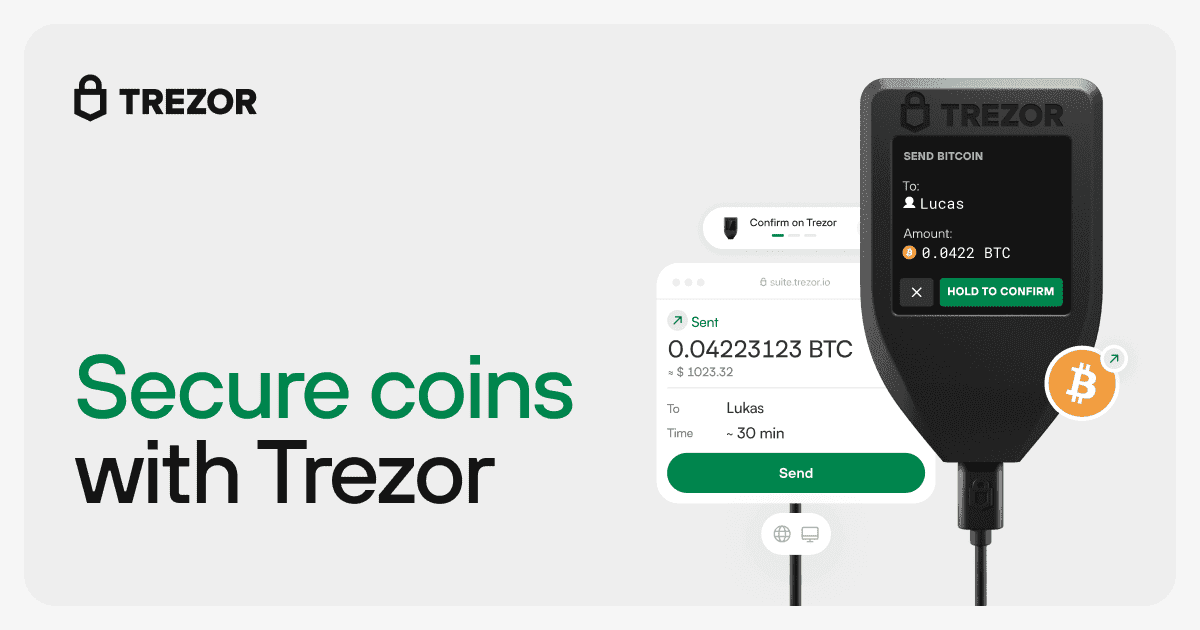
Sending Crypto
Enter the transaction details in Trezor Suite
Confirm the details on the device screen
Approve the transaction physically
Always trust the device screen over your computer or browser.
Supported Cryptocurrencies
Trezor supports many cryptocurrencies, including:
Bitcoin (BTC)
Ethereum (ETH)
Litecoin (LTC)
Cardano (ADA)
Polygon (MATIC)
ERC-20 tokens
Asset support depends on your device model and firmware version.
Optional Security Features
Passphrase – adds extra security and creates hidden wallets
Hidden wallets – multiple wallets under one recovery seed
Shamir Backup (Model T) – splits recovery seed into multiple parts for safer backup
Common Mistakes to Avoid
Using unofficial websites or software
Typing recovery seeds on a computer
Storing recovery seeds digitally
Buying used hardware wallets
Ignoring firmware updates
Most losses happen because the recovery seed was mishandled.
Lost or Damaged Device
If your Trezor is lost or broken:
Funds remain safe
Use your recovery seed to restore your wallet on a new device
Access your crypto through Trezor.io/start
Without the recovery seed, there is no way to recover your wallet.
Final Tips
Always start at Trezor.io/start
Verify addresses and transaction details on the device screen
Keep your recovery seed offline and secure
Update firmware regularly
By following these steps, you can safely manage and protect your cryptocurrency.